Thursday, May 17, 2012

Loose Parts- Creativity on the Playground


We are in the final design stages for our natural playground.  It is very exciting.
 
One of the areas that we have wanted to create is a loose parts area.  Since the new playground planning is taking longer than expected, we decided not to wait on this area.  It will be housed in a different section of the playground in the new design, but it is already a huge hit.

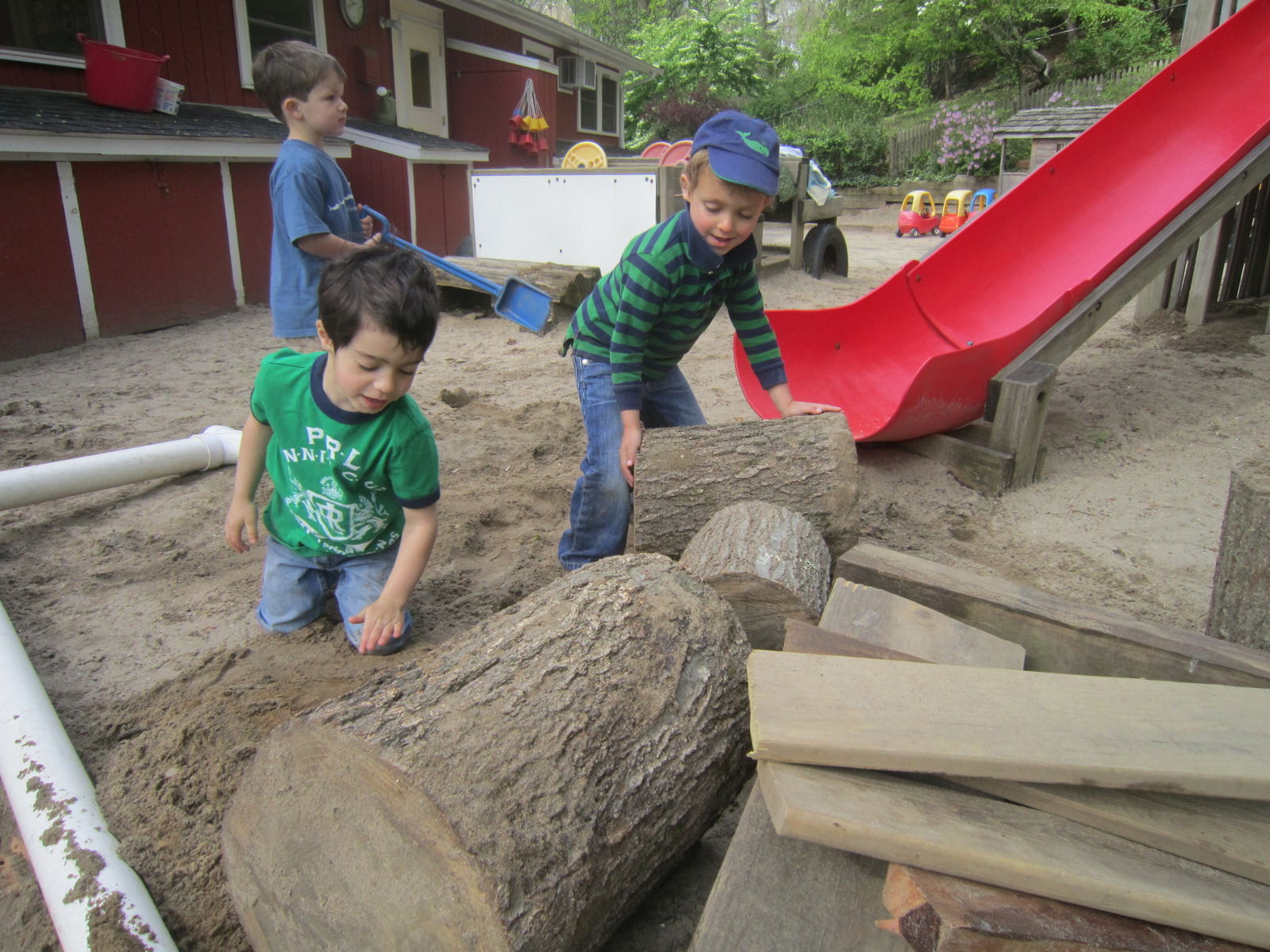
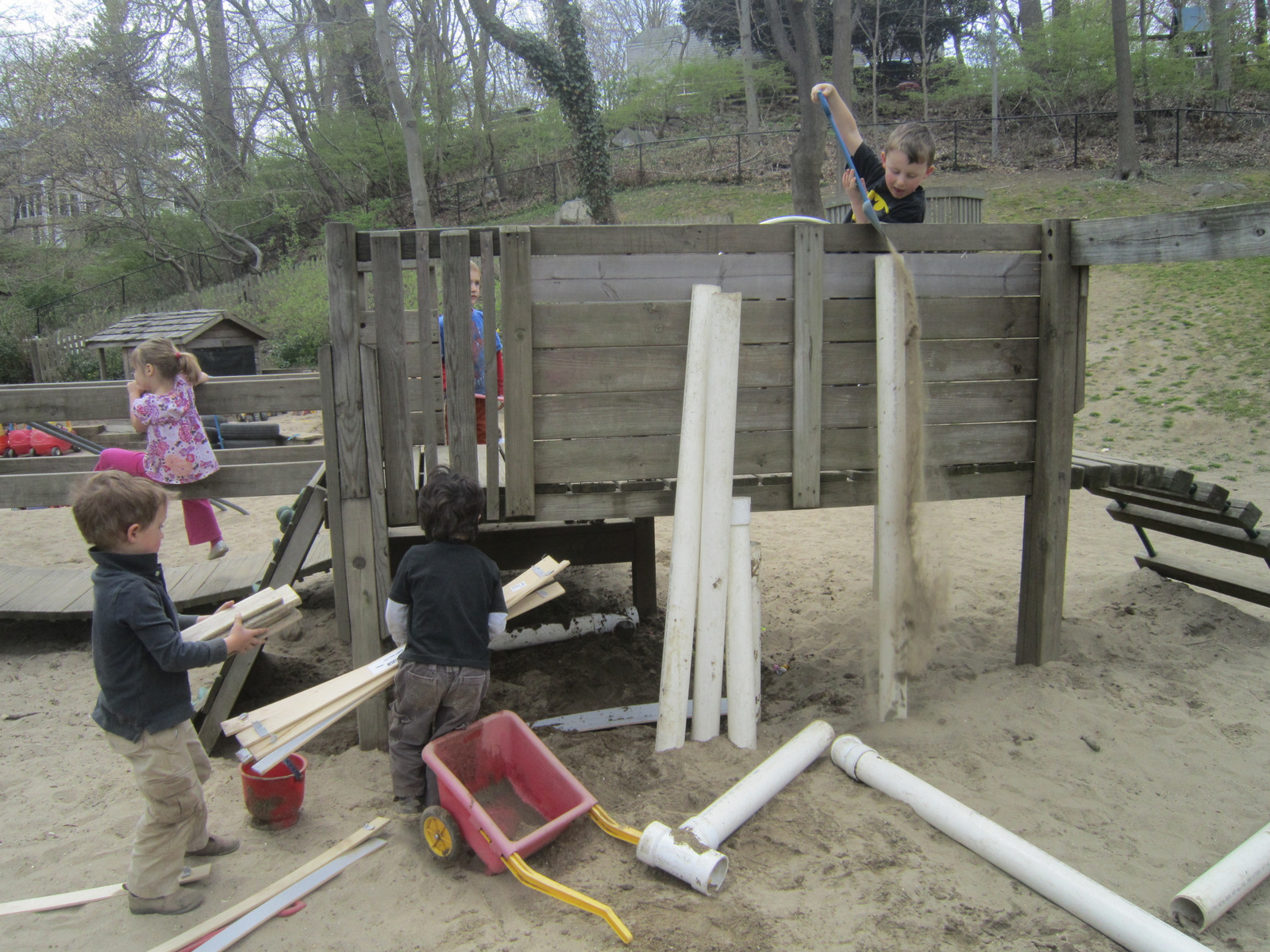
What we did to create it is build upon what we already had on our playground.  We have a collection of large PVC pipes of different sizes that the children put together and take apart, fill with water, sand, etc and use in a variety of ways.  We added large milk crates and filled them with small sticks, large branches, large rocks, small rocks, seashells and bamboo pieces a parent had collected for us.  We also had some tree work done fairly recently and saved the cut up stumps.  We then added some cut up boards of various thicknesses and lengths. 


The children having been using these materials in a variety of ways to create forts, hot tubs, construction sites, swimming pools, obstacle courses, traps and much more.  The creativity this fosters and the problem solving opportunities that these materials have provided have been boundless.  They are using gross motor skills to move heavy pieces and social skills to negotiate use of materials and teamwork to move them. 


Aside from the pipes, we didn’t spend any money amassing these materials.  They were found around our site.  We simply pulled them together and placed them in an inviting area. 
The pictures truly speak for themselves.  


This is not  just for the young children either.  A innovative use of loose parts was piloted with the concept of a Scrapstore Playpod at an elementary school.   This was a video brought to my attention in a post by Exchange Everyday.  This would be fantastic!  Please pass along to your elementary school principals and PTOs.  All children deserve this kind of challenging creative play. 


What To Do With Old Play-dough


Wondering what to do with your leftover homemade play dough as the year comes to an end?

Make sculptures.
Cut up cardboard for the children to use as bases. 
Put out a collection of materials.  We used popsicles sticks, googly eyes, sequins, pipe cleaners, glitter, beads, old tinker toys….


Then we put out the old play dough. It used to be several different colors and had been well loved into one large hunk of brown.  The children each took a chunk and created a sculpture.  Some focused on creating designs


 while other decided to make faces. 


Each one was so unique.  This was a well loved center with some children making at least three sculptures.  Luckily we always make a LOT of play dough!

Give it a try.  I would love to see what you put out to add to your sculptures.  Share some pictures with me.  

The Morning Graph-A Simple Way to Implement Bloom's Taxonomy


Looking to incorporate math concepts into natural activities for young children?
 
The morning question works really well with young children.


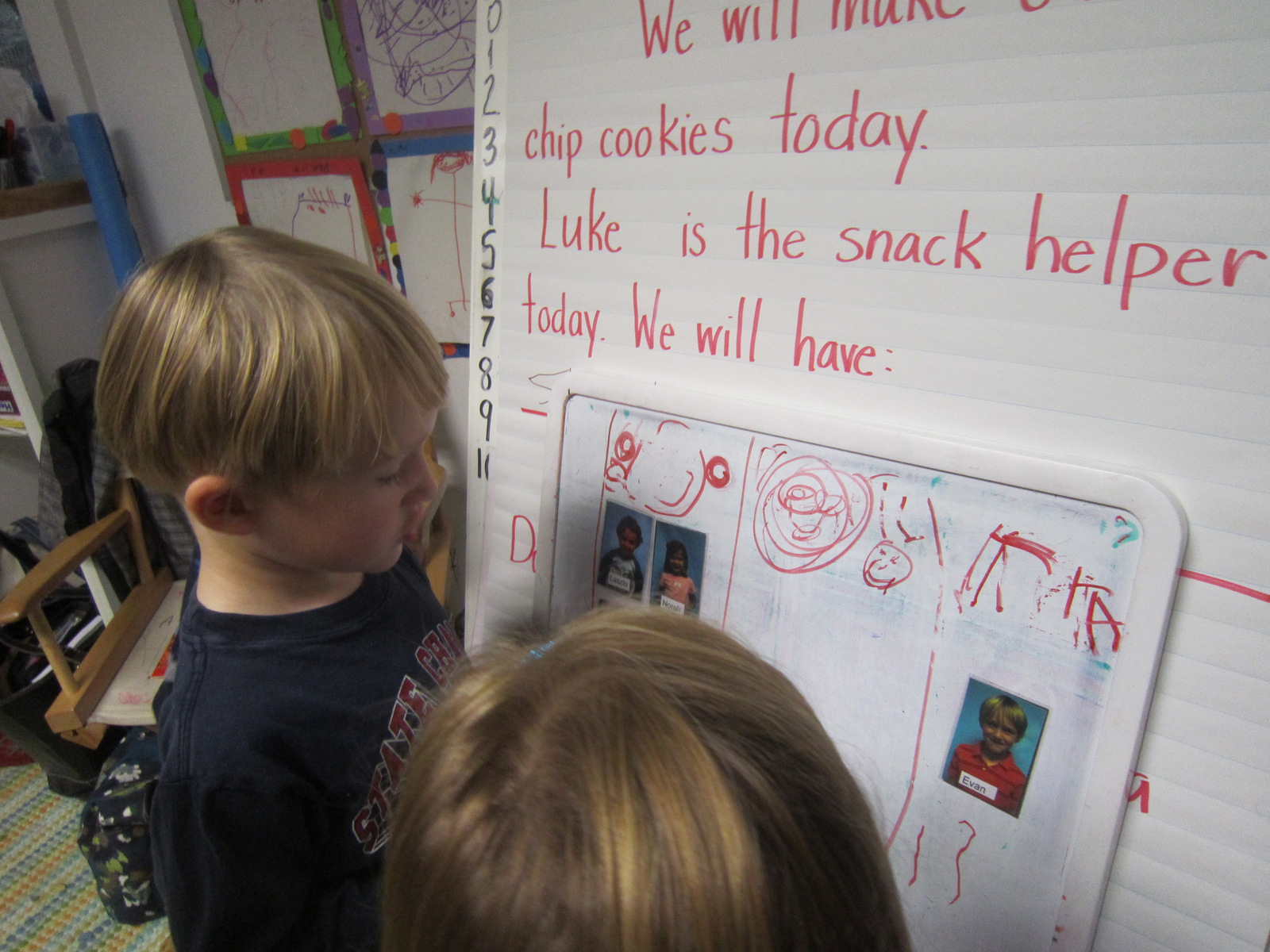
Before we start school I take a photograph of each child.  I use this all around the room making name tags and mailbox labels, etc.  One of the things I make is a photo magnet for each child and teacher.  They sell business card magnets in packs at Staples. 

We have metal fire doors, so we put the magnets on the door each morning.  When the children come in from the playground each morning, they take their magnets off the door and answer the questions posted on a dry erase board. 

It starts off simple with questions such as are you a boy or a girl and gets more elaborate such as how many letters are in your name.


When we gather for group time we answer several levels of questions regarding the graph.  First I ask the children what they notice.  Some predict which side has more or that one section might be empty.  Then we count how many magnets are in each section of the graph.  Once counted we discuss concepts such as more or less, fewer, most, etc.  I also ask them to use the information on the graph.  Can you tell from this graph how many sisters Johnny has?  How many sisters does Max have?  How do you know?  Do you think bananas are a good snack choice for this class?  why or why not?  Should we make blueberry muffins again? How did you get that answer? So children are learning to process the information in several different ways. The children also write the numbers on the white board after counting giving each one a quick lesson in numeral writing when it is  his/her turn. But this is not isolated exercise.  It has meaning to the children as they are interested in the answers.  
 
We have even used this activity to help us with some of our social issues.  When we were having some trouble with the boys vs. the girls, we asked questions about what toys they like to play with each day.  Then we talked about how both girls and boys chose blocks, or dramatic play or the outdoor kitchen.  Or both boys and girls had a favorite stuffed animal.


We used this graph to critique our cooking projects and to vote on decisions in the classroom.  

Towards the middle of the year, the children started to play with the graph during activity time changing the question and reenacting the graphing discussion with their peers as they played school. 


Many would suggest questions to be posted the next day for the class.  It became a community effort. 
This is a very simple way to incorporate math into every day in a natural, intriguing way that accesses many of the different levels of questions on Blooms taxonomy.   All you need are some magnets and a white board.