Saturday, August 20, 2011

Day Two: The Project Approach, Topic Selection


Well, what was supposed to be my musings of day two of The Project Approach seminar has taken me over a month to write.  Duties of running a summer camp, hiring new staff and mothering three active children in the summertime took precedence.  Now I find myself preparing my class and school for opening again in a couple of weeks.  I am furiously rereading my notes and handouts and trying to decide what, how and why should I implement my learning.
 
The morning of the second day was heavily focused on topic selection.  I was very interested in this area as with Emergent Curriculum, I was constantly monitoring the children for their interests so that I could follow their lead.  If a strong interest did not seem to emerge we would try other provocations and wait.  We called these ordinary moments.  Wonderful learning experiences were still happening during these times between focused topics, but they were not necessarily related to one another.  Trying to decide what the greatest interest of the group was often proved difficult and sometimes the topic seemed too complex or abstract to study at the level a four year old would understand. 

Lillian Katz and Sylvia Chard explained that following children’s interests can be risky and create pitfalls as not all of their interests are necessarily the best topics for project work. 

For example dinosaurs, a often chosen topic in preschools and one my class has studied in the past, is not a good choice with this approach because one of the main criteria for topic selection with Project Approach is that it has to be relevant and many opportunities for direct observation need to be available.  We cannot take children to actually see dinosaurs and they cannot dig up actual dinosaur bones.  When I described how I would boil chicken bones and hide them in the sand in marked off lots to simulate paleontologist expeditions, they told me I was teaching children to find chicken bones, and draw chicken bones… not about dinosaurs. 

The criteria for topic selection with Project Approach are:

1.       It needs to be relevant to the child with sufficient opportunities for direct observation
2.       It needs to be within at least some of the children’s regular experience
3.       The class needs to have access to local resources and experts on the topic; the children need to be able to take a lot of data on the topic, to actually experience it.
4.       It has to have potential for representation in a variety of media; can the children write about it, draw about it, make models of it, etc. 
5.       It should encourage children to develop an interest worthy of their time; it is rich enough to last for an extended period of time.
6.       It is the right size; optimal specific; dogs rather than pets(too abstract), but not just Mrs. Smiths dog(too specific)

The purpose is to help children make better, fuller, deeper sense of their own experiences.

An example given was the topic foodFood as a whole is too broad of a topic, and My Favorite Food is very limiting and cliché, but Foods We Don’t Like allows opportunities for surveys, drawings, discussions, investigations, representations, experiments, and much more.  Food is something all children have in common.  It is real, relevant and rich.

Thinking about topic selection for a project this way, they explained that it can even be done in conjunction with a theme.  For example if your theme is the seasons, your topic may be The Changes in the Trees around Our SchoolSeasons is very broad, but The Tree Project lends itself to walking to the trees, doing some drawings & paintings of them, forming some questions about the trees and then discovering some answers.  There are opportunities to revisit the site many times to collect more data.  This is a worthy topic as it gets the children interested in their specific environment. 

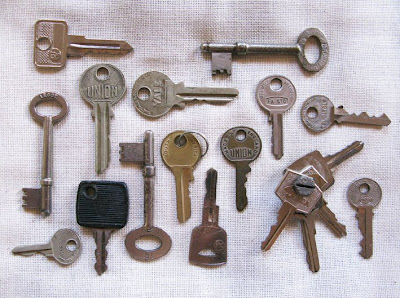
Some extremely interesting projects done with preschool children were shared including a project done on balls, a nearby train station, a shoe store, and a study of geese along the river.  One idea that has me intrigued was proposed by a colleague at the workshop; a study of keys-so practical, so much a part of our daily lives and often a topic of interest to children.

This idea and one on cameras has my mind percolating.

I would love to hear your thoughts and questions on topic selection and any projects that have been particularly successful for you.  

Thursday, July 14, 2011

Engaging Children's Minds: The Project Approach Day 1

I am currently attending Engaging Children’s Minds: The Project Approach with Dr. Lillian Katz and Dr. Sylvia Chard.  

Today I asked Lillian to explain the difference between Emergent Curriculum and the Project Approach.  It was not an easily answered question.
 
First I was surprised that she didn’t have strong feelings about Emergent Curriculum or react as if she had heard this question a million times before.  I would have thought this question would come up often.

I am still trying to formulate my take on the explanations she and Sylvia gave, but I believe the gist of it is that Emergent Curriculum follows the lead and interests of the children, but on a more surface level.  The Project Approach takes an interest of the children OR of the adult who has made it engaging for the children and then investigates it at a much deeper level.  The children are much more responsible for conducting the investigations not just participating in activities related to this area of interest. 

In thinking about what I do in my classroom, I believe I am doing a hybrid or rather a combination of the two.  My classes and I participate in in-depth investigations of topics and participate in the three phases of the project.  At the same time, I create learning centers that relate to the investigation we are attempting. 

What I have not done, is chose the project for my students, which she describes as perfectly acceptable.  She explained that sometimes children are not interested in something because they haven’t been exposed to opportunities to even know about it in the past.  If it will expose them to something new, fitting in the guidelines of topic selections for projects: real, meaningful and relevant, than it has merit. 

I so want a one-one session with these two women to describe what I am doing in my classroom and have them help me define it.  Then, again, why do I have to have a clear definition of one or the other? This hybrid is working and working very well.  Would it be better more clearly delineated?  Do we ever actually only teach one way?

These are the questions I am wrestling with among many others at the close of day one. I am looking forward to simulating the approach starting tomorrow as we will be studying our own projects in groups and going through each phase.
 
A few women I have met today and I are thinking of investigating the water features in the hotel; the fountain in the lobby, the pool and yes, the hot tub.  We will need to do a lot of research!

I am interested in engaging in this discussion, so I would love to hear your thoughts.  

Cool Off with Car Wash Play


A wonderful outdoor activity for these hot summer days is to have a car wash or bike wash.


Fill big bins with soapy water and add large sponges.

The children love dunking the sponges in and carrying them to the vehicle of their choice to scrub.


Some even get very thorough turning the cars and bikes on their sides to get underneath-this can even lead to some interesting discoveries of insects….but that is another post.


Then have buckets for rinsing the cars.


We used a small sprinkler and smaller buckets for rinsing. The children got cooled off in the sprinkler while waiting for their rinse buckets to fill. They can even ride through the rinsing station on the soapy bike or car.


It’s even more fun if you play some cool music outside as well!

And the added bonus is that all of your bikes, trikes and cars will be nice and clean.