Friday, February 11, 2011

Documentation Panels


One of the pieces of emergent curriculum and the project approach that I am challenging myself to learn more about is documentation panels.
 

I brought out photos of the various pieces of our study that we have been invested in and the children and I put them on poster board.  Then they dictated information that they remembered about what was in each photo. 


It is a wonderful tool to use to assess what the children have learned from the experiences as they recall the events depicted in the photos.  The panel with the trip to the nature center had a lot of information that the children had learned from the naturalist.  They were recalling from memory what they had heard during the trip. 

On one of the panels that depicts the experiment we did putting out food in hula hoops had photos on it that allow the children to actually count the number of apple slices remaining each day.  We documented what their predictions were and what the result was of the experiment as well. 

The photos that we are not using, I put next to their science journals and the children can choose to glue them into their journals and write or dictate the information they think is important about that photo. 

There is much more to the process of documentation panels than capturing dictation surrounding photos, but with learning any new skill, getting started is the most important step. 

What are you doing with documentations panels?  Please share your experiences.

The Tracking Adventure Continues...Right Outside Our Door!


A shout out to Ron King at Natural Playgrounds Company for helping me to see outside the boundaries of our playground fence.  We had an amazing meeting with him and are so inspired to get started on our natural playground-but that will be another post.

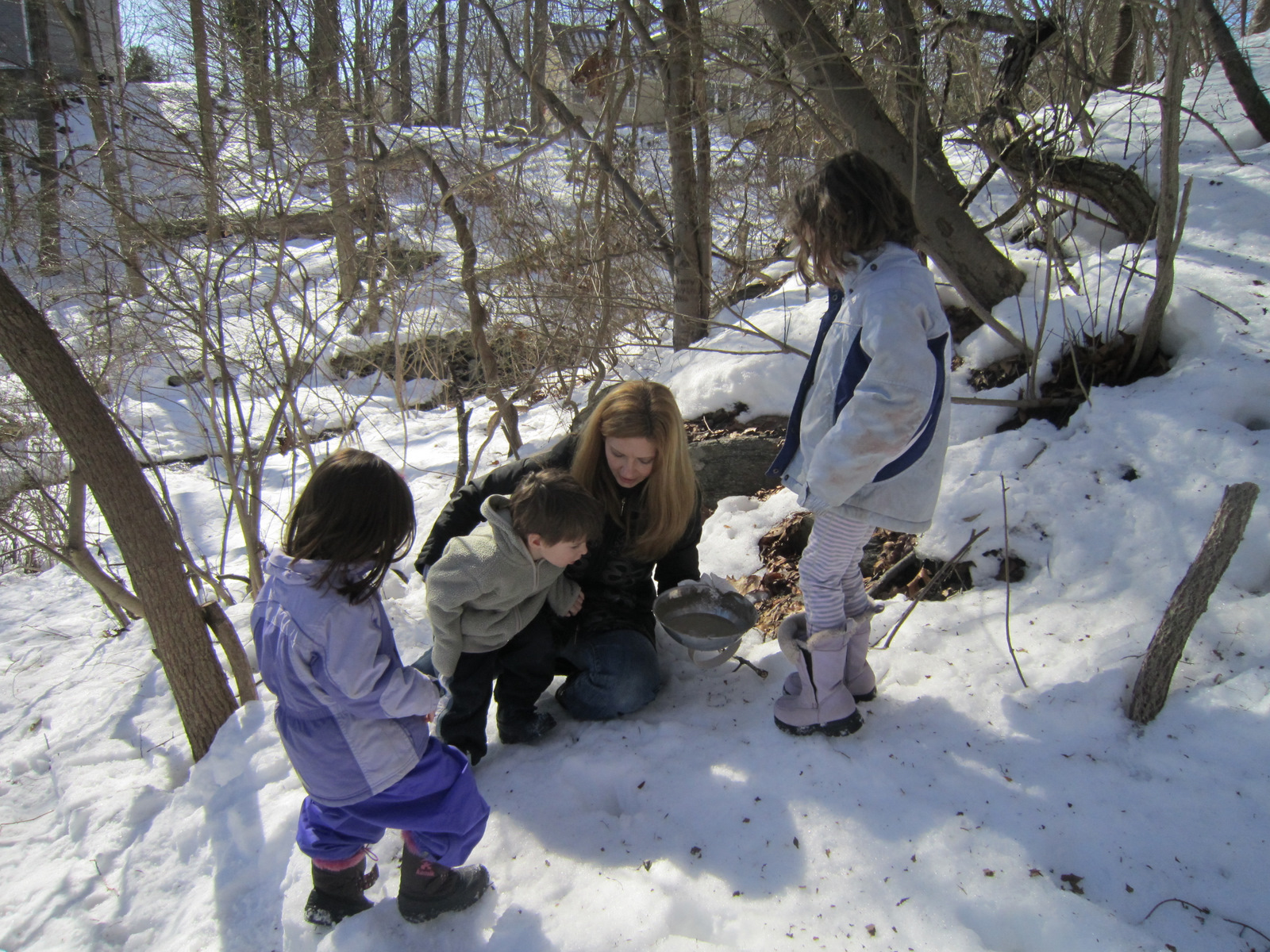
During his visit, he walked the wooded area behind our playground fence.  He came back to tell me about the evidence of deer he had seen there.  I knew they walked behind there as I had seen them before, but it didn’t occur to me to take my students for a nature walk just beyond the barriers of our very own fence.  So yesterday, we did just that. 


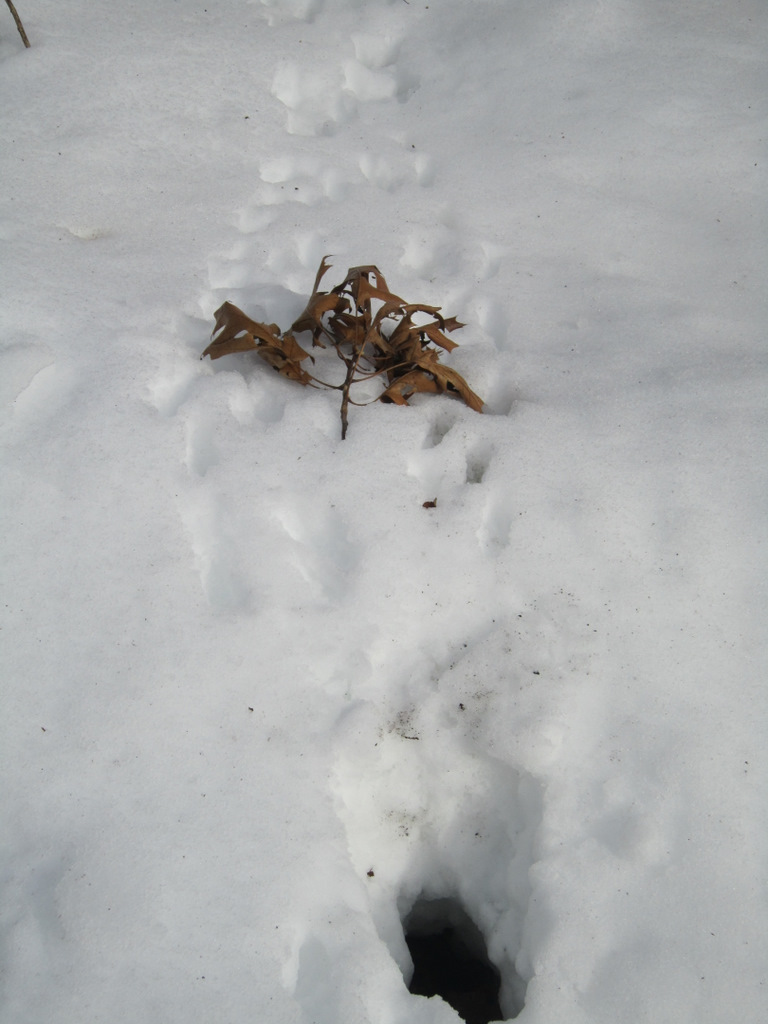
We walked and used our knowledge as budding naturalists to look for evidence of deer presence.  We found it.  We came across many piles of deer scat and beautifully preserved footprints in the icy snow.  I knew we had to seize this moment!

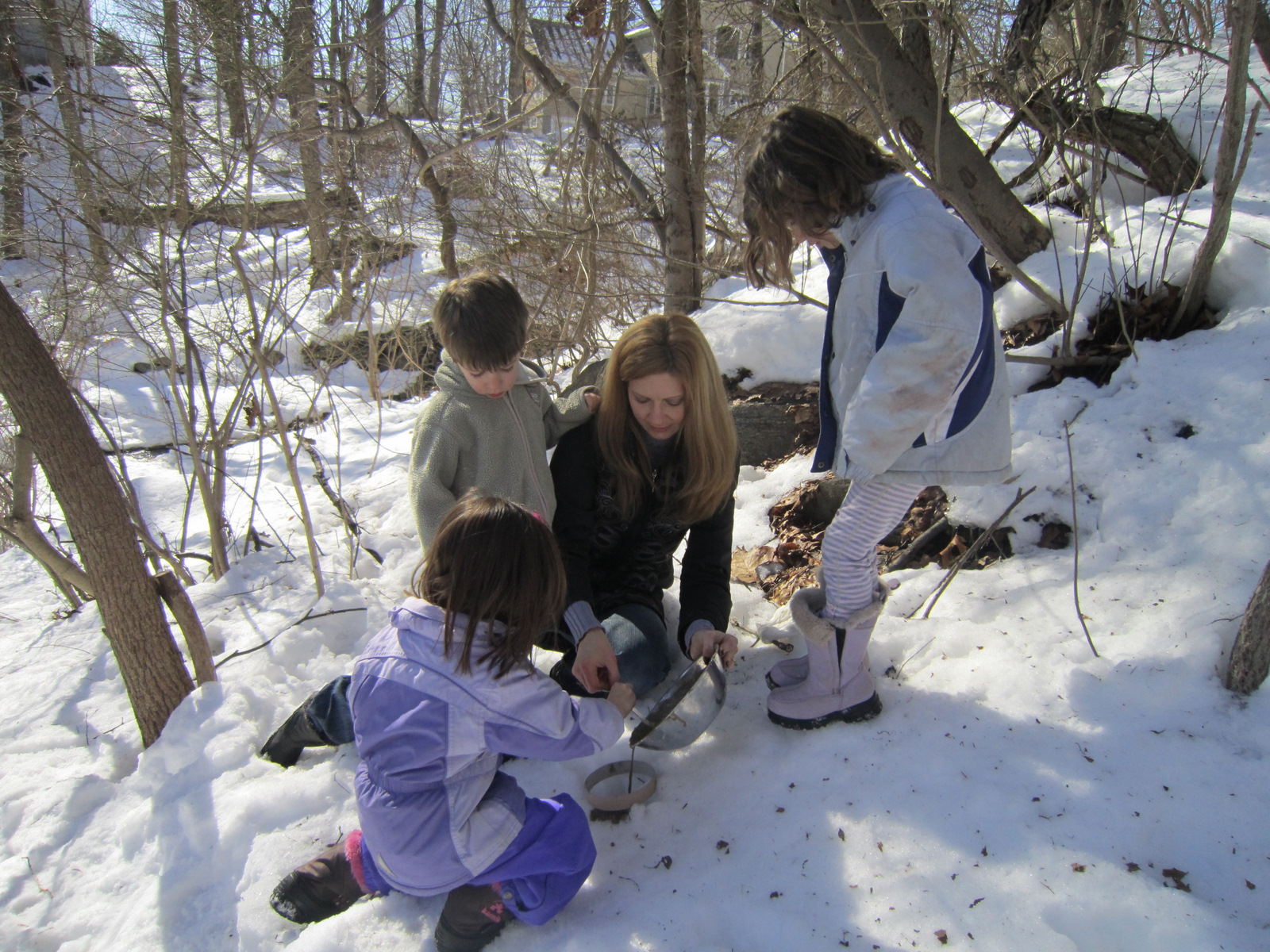
When we started our playtime inside I worked with small groups of children to mix cement


Find a good print


Put a frame around it


Clear out any debris collected on the print


And then pour the cement into the footprint


We did this for four different prints.

This morning we went back and dug them up.  
The cement stuck to so much snow and mud that we had to take the entire chunk inside. 


We thought it would melt, but when class was over, the impressions were still muddy, icy frozen blocks.

We are leaving them on trays to check on Monday.


I hope the impressions work.  I have never done this before.  It is part of what makes emergent curriculum so exciting.  My students are challenging me to learn new things right along with them!

Wednesday, February 9, 2011

We are naturalists, we are animal trackers!


We finally made it on our field trip this week. We had been snowed out three previous attempts.

We went to the Darien Nature Center.  Before the trip I spoke on the phone with the naturalist and explained what the interests of the children were and some of our questions.  She was excited that I was actually willing to take the children on a walk through the woods in the snow.  She doesn’t get many teachers willing to do that with their classes.  Of course I was willing!  We wanted to explore the snow and hunt for tracks. 

We came prepared with our web of questions.  We also brought along our science journals to do some sketching. 


The naturalist, Ioa, showed us live animals first.  A rabbit


two kinds of turtles,


a snake

and a ferret. 

The children really enjoyed petting the animals.  They were actually able to explain quite a bit about hibernation to our naturalist.  She helped us narrow down the animals that could have actually eaten our homemade birdfeeders, by talking about which animals lived near us and which ones would be out in this kind of weather. 

We were able to spend some time in the “zoo” room which houses many other animals. 


Unfortunately due to time constraints, we weren’t able to stay in the room and sketch as Ioa had another class coming in for a tour.  She was actually worried about the children walking in the woods since the snow had gotten quite deep and with the rain we had had a few days earlier, didn’t think we would see much in the way of tracks. 

Not one to divert easily from a good emergent learning experience….I forged ahead with my crew into the woods.


It was amazing!


Not only did we see many, many tracks, but we saw evidence of animals crawling out of burrows under the snow.


We could see tracks from tree to tree.  We could see where animals hopped up to a stream to get water.  I could hear exclamations of, “look at those tracks”, “a squirrel was here”, “and I think a bunny made those”.  It was first hand learning about animal tracking.  We were “reading the stories in the snow” as the naturalist had just explained to us moments ago.  The pages of the books we had been reading were coming alive before our very eyes.  The excitement of the children and the parent chaperones was palpable.


When we returned to school, we immediately sat down to do some memory sketching in our science journals and record our thoughts of the trip. 


On this day, we were naturalists, we were trackers and we were doing incredible learning through our play.